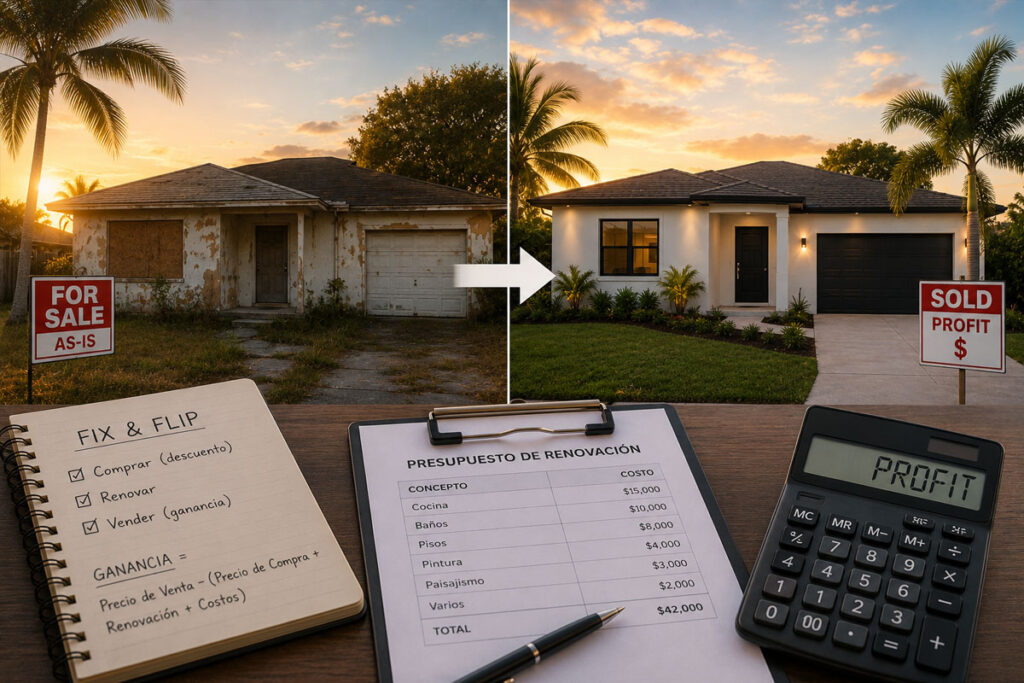
What exactly is a Fix & Flip?
A Fix & Flip is a real estate investment strategy that consists of acquiring a property below market value, renovating it strategically and selling it at a higher price in the short term. The typical timeframe is 6 to 18 months.
In Florida this model enjoys especially favorable conditions: high housing demand, limited inventory and a liquid market. Properties that have been on the market for months create opportunities to buy at a discount.
The three phases of a Fix & Flip
1. Acquisition
A property with hidden value potential is identified: it may be outdated, poorly presented or have a motivated seller. The purchase price largely determines the final profit margin. The 70% rule says you shouldn't pay more than 70% of the ARV (After Repair Value) minus the renovation cost.
2. Renovation
An improvement plan is executed, focused on the elements that add the most value to the sale price: kitchen, main bathrooms, facade and common areas. A well-directed renovation can completely transform a buyer's perception.
3. Sale
With the property renovated and well presented, it is listed at a price that reflects the improvements. The goal is to close within 60 days of listing.
What is the typical return?
In the Miami-Dade and Broward market, well-executed Fix & Flip projects generate a 15% to 25% return on investment over 12 months. The IRR (annualized internal rate of return) can exceed 20% when the operation is efficient.
How can you participate as a partner without being the operator?
Through the co-investment model, several partners contribute capital to a Fix & Flip project run by a specialized team. Each project is structured in an independent LLC, with an Operating Agreement that defines each partner's stake, the order of distributions and information rights.
This model lets you participate in real estate projects with accessible tickets (from $25,000) without having to manage the property or be the direct operator.
Risks to consider
Like any investment, Fix & Flip carries real risks: renovation cost overruns, delays in selling or market corrections can affect the projected return. That's why it's essential to work with operators who have a proven track record and projects with conservative margins.
The returns mentioned in this article are projections based on past projects. They do not guarantee future performance. All investments involve the risk of partial or total loss of capital.