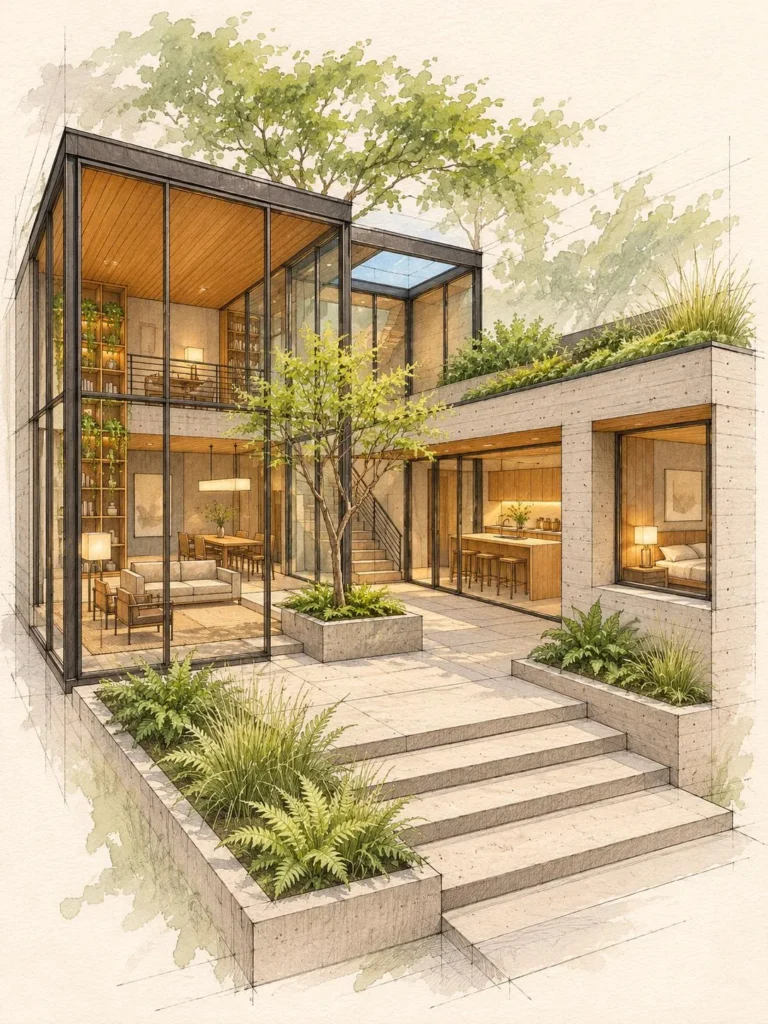
Some houses sell because of their location, and some sell because of how they feel. The best ones combine both. When a property sits on a good lot but its architecture is stuck in another era, design becomes the most powerful tool for unlocking its value.
At TRIBU we work with architects and designers to explore, before a single brick is moved, everything a property could become. In this article we explain how we approach that transformation and which design decisions tend to have the greatest impact on quality of life and appreciation.
Renovating is more than changing finishes
Painting, replacing floors and updating the kitchen improve a house. But a substantial architectural renovation goes further: it changes how light comes in, how spaces connect, how much living area the property has and how it relates to the outdoors. It's the difference between a remodeled house and a new home built on an existing structure.
This kind of intervention makes sense when the land is worth more than the building, when the layout is outdated, or when the house has untapped potential: a large lot, a slope, a view or an unused courtyard.

Five design decisions that change a property's value
1. Natural light
Large windows, double-height spaces and interior courtyards bring light into the whole house. A bright home feels larger, healthier and more modern, and that shows in photos and showings. The courtyard housestyle, for example, organizes the floor plan around a central garden so every room gets light and ventilation.
2. More square footage without using more land
A second story on columns, a rooftop terrace or a cantilevered volume add usable space without taking up the yard. On city lots, where land is limited, building up is often the most efficient way to increase value per square foot —always with the proper permits.
3. The connection with the outdoors
In Florida's climate, the outdoors is another room. Covered terraces, outdoor kitchens, pools integrated with the living room and floor-to-ceiling sliding doors let the house be lived outward. It's one of the features buyers in the region value most.
4. Materials with character
Wood, light stone, slatted screens and exposed concrete give a facade identity and set the property apart from cookie-cutter homes. It's not about expensive materials, but about a few well-combined materials that hold up well to sun, humidity and hurricanes.
5. A facade with presence
First impressions decide. A well-designed entrance, clean volumes, lighting and landscaping turn the facade into the home's best advertisement. It's also the image that leads every sale or rental listing.

How we choose the style for each property
No style is better than another: some styles simply fit a given lot, neighborhood and goal better. A sloped lot calls for terraces and steps; a waterfront property calls for opening up to the view; a standard city lot benefits from compact volumes and a usable rooftop.
That's why our process has four steps:
- Assessment: we study the property, the lot, the zoning and comparable sales in the area.
- Options: the architecture team prepares sketches with different alternatives.
- Numbers: each option is evaluated by construction cost, timeline and the value it adds.
- Design and construction: permits, execution and follow-up through delivery, rental or sale.
You can see the eight styles we work with —from contemporary tropical to the courtyard house— on our page about design styles.
Design and numbers, always together
Great design that can't be paid for is not an opportunity, and a cheap renovation the market doesn't value isn't one either. Every sketch is checked against the area's comparables: if the transformed version of the house would sell for more than it costs to get there —with a margin—, the project makes sense. If not, it gets adjusted or discarded.
If you'd like to dig deeper into which specific upgrades tend to pay off at sale, we recommend reading the renovations that add the most value to a Miami home.
Your property can be so much more
Many homes hide potential that isn't visible at first glance. With design, functionality and real estate vision, you can improve the quality of life of those who live there and, at the same time, create an opportunity for appreciation. If you own a property and want to know how far it can go, contact us and let's explore the options together.